Climbing
How Competition Climbing Is Scored
The three competition disciplines use entirely different scoring logic, which explains why the same athlete rarely dominates all of them.
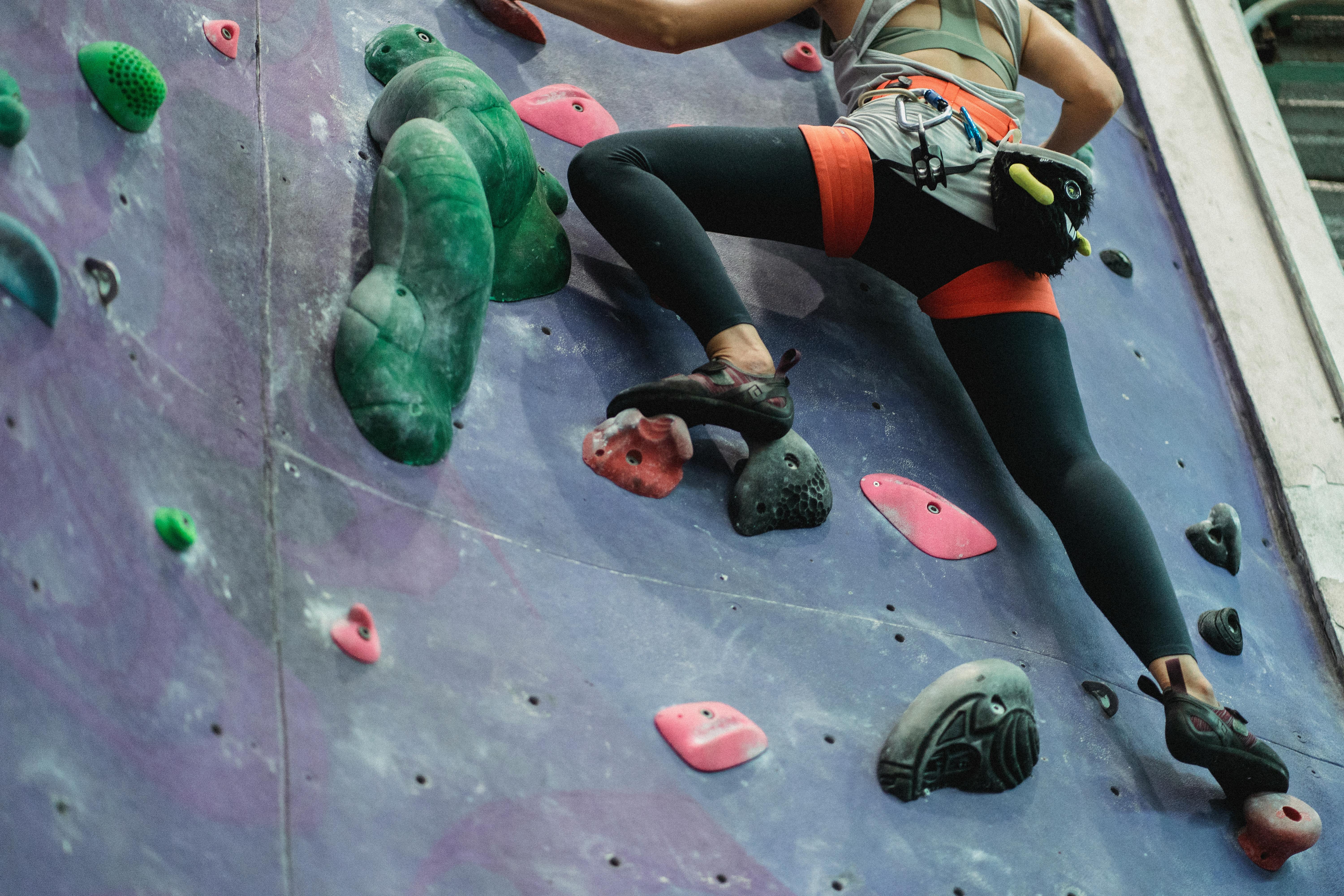
Competition climbing has grown from a niche circuit into an internationally televised sport with three distinct disciplines. Each uses a different scoring approach, and those differences shape who wins.
Lead scoring measures how far you got
In lead, climbers attempt a long route on a rope with a time limit, and the score is the highest hold controlled before falling.
Holds are numbered in sequence, and a climber who makes a controlled move toward the next hold can be credited with progress beyond the one they held.
Because the route is unseen beforehand, competitors get a short observation period from the ground, and reading the sequence correctly is a large part of the discipline.
Bouldering counts attempts as well as completions
Boulder competitions present several short problems, with the score built from how many were completed, how many intermediate scoring holds were reached and how many attempts each took.
The attempt count is what makes the format tense. Two climbers who complete the same problems are separated by who did it on fewer tries.
Formats have been revised more than once as the sport has grown, so the exact points structure at a given event is set by the governing body's current rules.
Speed is a fixed route on a standardized wall
Speed climbing uses one route, identical worldwide, on a wall of standardized dimensions and angle. Competitors race head to head, and the score is elapsed time.
Because the sequence never changes, the discipline is closer to a track event than to the others, with athletes rehearsing an identical set of movements for years.
False starts are detected by the timing system, and a false start eliminates the athlete from that round, which adds a reaction-time element on top of the climbing.
Isolation is what keeps it fair
In lead and boulder, competitors are held in an isolation zone and cannot watch earlier attempts, so everyone sees the problem for the first time under the same terms.
Route setting is therefore a competitive design job. Setters aim to produce a spread of results rather than problems everyone or nobody completes.
A round where many climbers finish everything fails to separate the field, which is why setters are evaluated on the distribution their problems produce.
Combined formats force a compromise
Multi-discipline formats require combining scores from events with incompatible units, and the method used has changed between competition cycles.
Any combination rewards breadth over specialization, which changes training priorities for athletes and has been the subject of continuing debate within the sport.
The consequence visible from outside is that combined results can differ substantially from what the individual discipline standings would suggest.


