Climbing
Choosing partners: the most consequential gear decision you make
People research ropes for weeks and choose the person holding the other end because they were available. That is backwards.
Rock, ice and alpine — movement, systems and judgement.

Climbing
Fear in climbing is usually treated as a weakness to be overcome. It is better understood as a signal with a variable accuracy rating, and the skill is in calibrating it.
Climbing
People research ropes for weeks and choose the person holding the other end because they were available. That is backwards.
Climbing
On sharp rock and in dry weather, skin fails before strength does. Managing it is unglamorous and it directly determines how much you can climb.
Climbing
Climbing alone with a self-belay is a legitimate technique with a real place in the sport. It is also unforgiving of exactly the errors that a partner would otherwise catch.
Climbing
The most common way to injure someone at a cliff is not to fall on them. It is to send something down at them, and almost all of it is preventable.
Climbing
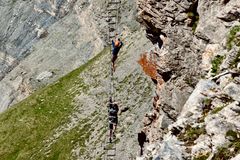
Steel cable and rungs make exposed terrain accessible to people without climbing skills. They also introduce failure modes that ordinary climbing does not have.
Climbing
The early start is not machismo. It is the recognition that mountains are dramatically safer in the hours before the sun does its work.
Climbing
No rope means no rope failure, and it also means every fall ends on the ground. Bouldering injury rates are not low, and most of the damage happens in the last metre.
Climbing
On a long route, the thing most likely to hurt you is not the climbing. It is being on the wall at six in the evening when you expected to be down by two.
Climbing
Finger tendons and pulleys adapt far more slowly than muscle. Almost every finger injury in climbing comes from that mismatch, and it is entirely predictable.
Climbing
Rappelling is entirely under your control, takes place on a system you built yourself, and kills experienced climbers with grim regularity. The failure modes are few and every one of them is preventable.
Climbing
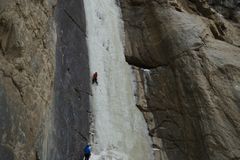
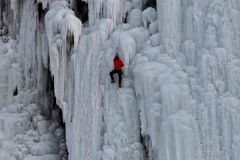
A screw in good ice is remarkably strong. A screw in bad ice is a decoration, and the difference is visible from the ground if you know the signs.
Climbing
Protection is rated against steel test rigs. Real placements fail because the rock around them fails, and different rock fails in entirely different ways.