Risk & Rescue
After the accident: the hours and days that follow
Everything written about outdoor safety is about prevention and rescue. Almost nothing is written about what happens next, which is the part people are least prepared for.
Risk & Rescue
Everything written about outdoor safety is about prevention and rescue. Almost nothing is written about what happens next, which is the part people are least prepared for.
Climbing
Fear in climbing is usually treated as a weakness to be overcome. It is better understood as a signal with a variable accuracy rating, and the skill is in calibrating it.
Gear & Kit
Outdoor equipment is expensive and much of it lasts far longer than one owner. But some items carry invisible damage, and those you buy new, without exception.
Risk & Rescue
A dead phone in poor visibility turns a routine day into a genuine problem. The backup is a map, a compass and a set of habits that most people no longer have.
Climbing
People research ropes for weeks and choose the person holding the other end because they were available. That is backwards.
Risk & Rescue
The most valuable safety information available to any group is the thing that nearly went wrong last month. Most groups never discuss it, because the conversation is uncomfortable.
Gear & Kit
Weight reduction has a clear hierarchy and most people work at the wrong end of it, sawing handles off toothbrushes while carrying a pack that is a kilogram heavier than it needs to be.
Climbing
On sharp rock and in dry weather, skin fails before strength does. Managing it is unglamorous and it directly determines how much you can climb.
Risk & Rescue
Acute mountain sickness is common, predictable and manageable. Its two severe forms are less common, unpredictable in who they hit, and kill quickly if ignored.
Climbing
Climbing alone with a self-belay is a legitimate technique with a real place in the sport. It is also unforgiving of exactly the errors that a partner would otherwise catch.
Climbing
The most common way to injure someone at a cliff is not to fall on them. It is to send something down at them, and almost all of it is preventable.
Risk & Rescue
The dangerous head injuries are not always the ones that look bad at the time. Some deteriorate over hours, which is why observation matters as much as the initial assessment.
Gear & Kit
A broken binding, a torn shelter or a split boot sole ends a trip only if you cannot bodge it. A small kit and some imagination usually gets you home.
Climbing
Steel cable and rungs make exposed terrain accessible to people without climbing skills. They also introduce failure modes that ordinary climbing does not have.
Risk & Rescue
Sometimes waiting is right and sometimes it is not. If you have to move someone, doing it badly can cause more damage than the original injury.
Climbing
The early start is not machismo. It is the recognition that mountains are dramatically safer in the hours before the sun does its work.
Gear & Kit
Almost nobody sets out intending to be in the dark. A significant fraction of mountain incidents involve people who are, and who did not bring a light.
Risk & Rescue
A larger group has more resources for a rescue and, reliably, makes worse decisions about avoiding one. The trade-off is real and worth planning around.
Climbing
No rope means no rope failure, and it also means every fall ends on the ground. Bouldering injury rates are not low, and most of the damage happens in the last metre.
Gear & Kit
Audit a pack after a long trip and the pattern is consistent: a handful of items used constantly, and a surprising mass of things that never came out.
Risk & Rescue
Every experienced mountain person has a collection of days they walked away from. That collection, not the summit list, is what makes them experienced.
Climbing
On a long route, the thing most likely to hurt you is not the climbing. It is being on the wall at six in the evening when you expected to be down by two.
Gear & Kit
Two packs with identical contents and identical weight can feel entirely different on a long day. The difference is where things sit and how the load transfers.
Climbing
Finger tendons and pulleys adapt far more slowly than muscle. Almost every finger injury in climbing comes from that mismatch, and it is entirely predictable.
Risk & Rescue
The quality of the information in the first call has a direct effect on how fast help arrives and what form it takes. Most people give it badly, because nobody has ever told them what is wanted.
Climbing
Rappelling is entirely under your control, takes place on a system you built yourself, and kills experienced climbers with grim regularity. The failure modes are few and every one of them is preventable.
Gear & Kit
The most expensive boot in the shop is worthless if it does not match the shape of your foot, and the shape of your foot is not something a review can tell you about.
Climbing
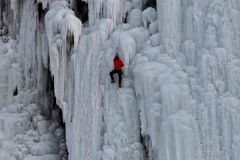
A screw in good ice is remarkably strong. A screw in bad ice is a decoration, and the difference is visible from the ground if you know the signs.
Climbing
Protection is rated against steel test rigs. Real placements fail because the rock around them fails, and different rock fails in entirely different ways.
Risk & Rescue
Most commercial kits are optimised for looking comprehensive on a shelf. A useful field kit is smaller, weirder, and organised around the injuries that actually happen.
Climbing
Lead falls are a normal part of climbing and most people learn to take them badly, by accident, over years. There is a technique, and it can be learned deliberately in an afternoon.
Gear & Kit
A rope has more specifications printed on its tag than almost any other piece of climbing kit. Most of them are quietly ignored, and two of them genuinely change how safe your system is.
Climbing
Every climber learns a mnemonic for anchor building and most can recite it. Far fewer can explain why each letter is in there, which is the part that matters when the rock does not cooperate.
Gear & Kit
Helmets are tested against specific, narrow scenarios. Knowing which scenario your helmet was designed for tells you a great deal about when it will help you and when it will not.
Risk & Rescue
Accident reports are full of competent, well-equipped, well-trained people who walked into obvious hazard. The pattern is not ignorance. It is a small set of mental shortcuts that work everywhere except here.
Climbing
Almost nobody drops a partner because they did something exotic. They drop a partner because of four or five errors that repeat across gyms, crags and countries with depressing consistency.