Backcountry Snow
The Compromise At The Toe Of A Touring Binding
Touring bindings must pivot freely for uphill travel and hold rigidly for descent, and the mechanisms that achieve both explain their release behaviour and their failure modes.
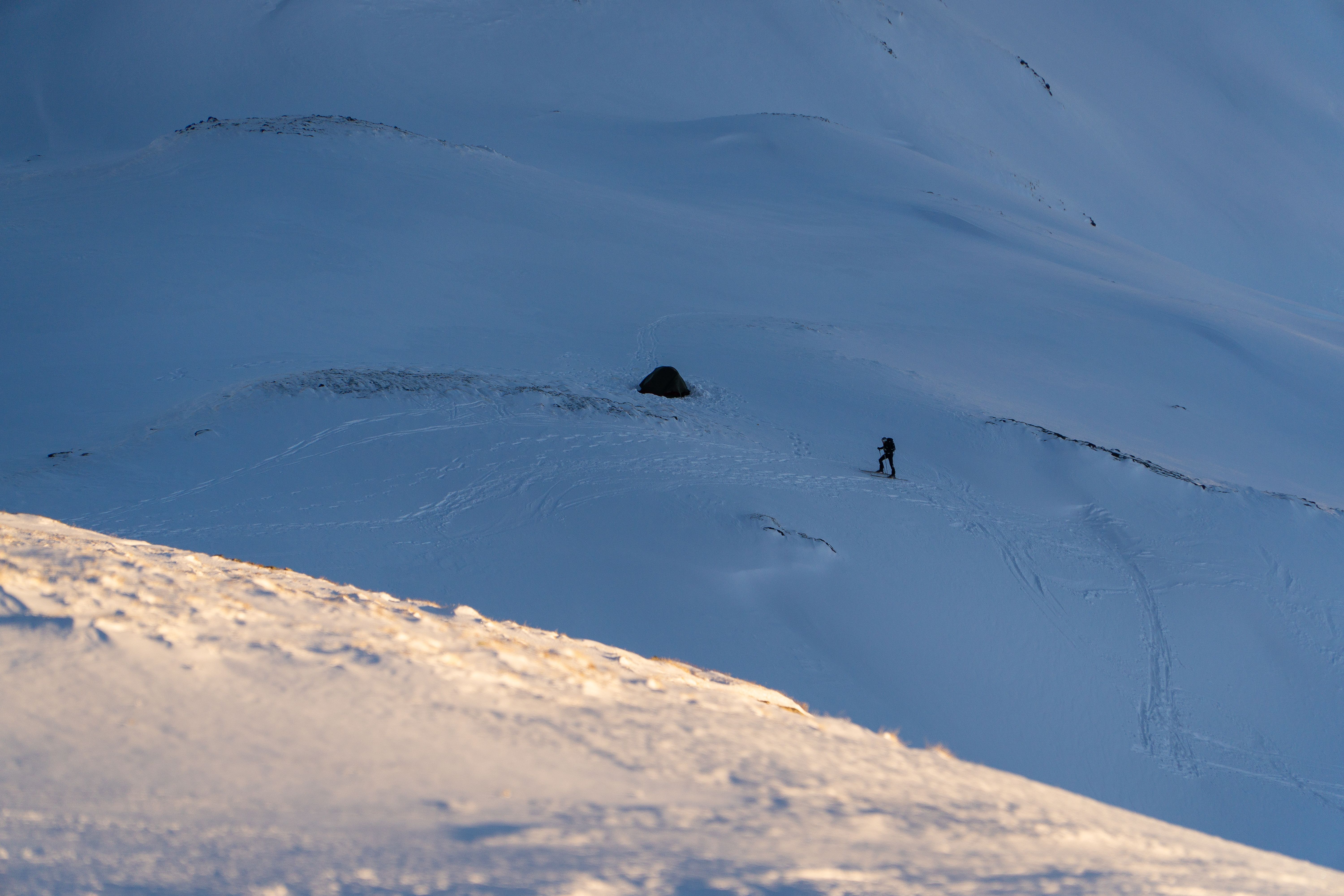
A ski touring binding solves two contradictory problems with one device. Understanding the compromise explains why these bindings behave unlike the ones used at a ski area.
Two jobs, one mechanism
Going uphill, the boot must pivot freely at the toe so the heel can lift with each stride, while remaining attached so the ski does not depart.
Going downhill, the boot must be held rigidly at both ends so that the skier's movements transmit to the ski edge without lag.
Every touring binding is an arrangement for switching between those states, and the design choices made in that switch determine weight, security and release behaviour.
Pins versus frames
Pin bindings clamp two metal pins into fittings moulded into the boot toe, creating a pivot that is very light because almost nothing moves with the foot.
Frame bindings mount the boot into a conventional-looking unit on a hinged frame, so the whole binding lifts with each step. They are heavier, and that weight is lifted thousands of times.
The pin approach dominates touring for that reason, while frame designs persist where a skier wants downhill performance closer to a resort binding.
Why release is different
An alpine binding releases by allowing the boot to slide out of a cup under load, with the release value set by spring tension against a defined geometry.
Pin bindings release by allowing the pins to spread or the heel to rotate, and the mechanics differ enough that release testing standards developed for alpine equipment do not translate directly.
Many pin bindings also offer a locked toe mode for climbing, which prevents release entirely. Forgetting to unlock it before descending removes the release function altogether.
Icing is the common failure
Snow packed into the boot toe fittings prevents the pins seating properly, which is the usual reason a binding will not close in the field.
Ice under the heel unit or in the climbing risers stops them operating, generally at a transition when hands are cold and the party is waiting.
Clearing fittings with a pole tip before stepping in is a habit rather than a technique, and it prevents most of these problems from arising.
What the system requires of the user
Boot and binding compatibility is specific. Fittings vary between manufacturers, and a boot that clicks in is not automatically one the binding was designed around.
Mounting is a workshop job, because screw placement into a ski is permanent and misplacement affects both performance and retention.
Because release behaviour differs from resort equipment and cannot be verified informally, setup and adjustment belong with a qualified technician, and transitions are worth practising somewhere safe before they are needed in weather.
Also by Jonas Lindqvist
- How to read an avalanche forecast properlyBackcountry Snow
- Spring snow: wet slides, timing, and the shrinking windowBackcountry Snow
- Your first season of ski touring: what nobody warns you aboutBackcountry Snow
- Electronics in the cold: keeping the things you depend on aliveGear & Kit


