Risk & Rescue
The Conditions That Ground A Rescue Helicopter
Helicopter rescue depends on visibility, wind, icing, altitude performance and daylight, and any of these can rule it out, which is why a ground plan is always required.
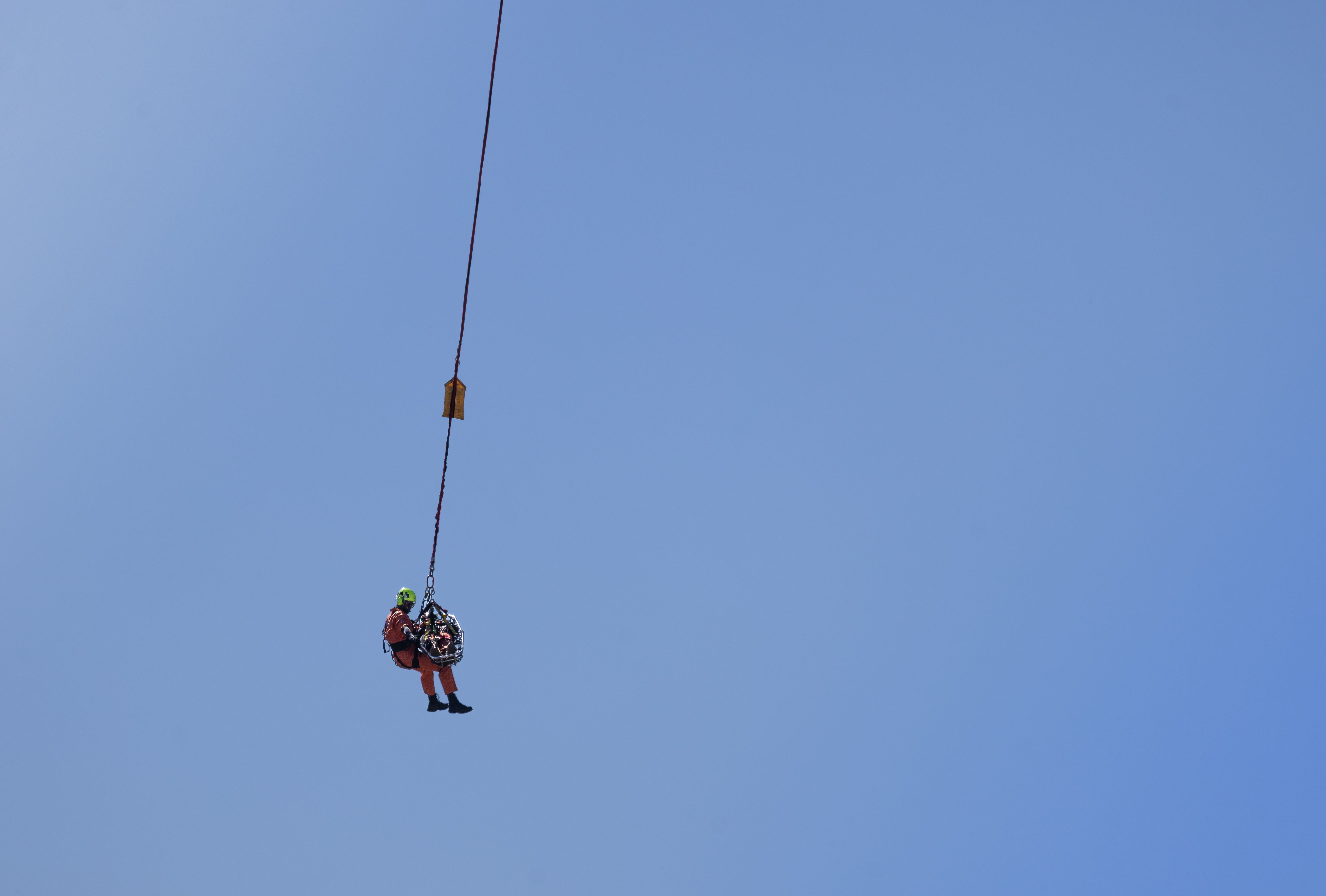
A helicopter transforms a rescue when it can fly. Planning around one is a mistake, because the conditions that produce accidents frequently also ground aircraft.
Visibility is the first constraint
Mountain flying to a specific point requires the crew to see terrain. Cloud on the hill, fog in a valley or heavy precipitation can make an approach impossible.
Partial cloud is often worse than total, because a crew may reach the area and be unable to descend through a layer to where the casualty actually is.
Flat light on snow removes contrast and depth perception, which is one reason winter operations can be refused on days that look clear from below.
Wind and turbulence
Mountain terrain generates rotor and turbulence that can exceed what a hovering aircraft can safely handle, particularly close to a ridge or in a steep gully.
A winch operation requires a stable hover for a sustained period, which is far more demanding than transit flight. Winds acceptable for flying may still rule out a winch.
Downwash is a hazard in the other direction. It moves loose snow, grit and unsecured equipment, and can destabilise people standing on steep ground.
Altitude reduces performance
Rotor lift depends on air density, which falls with altitude and with temperature. A machine that hovers easily at a valley floor may have little margin high on a mountain.
This limits the weight that can be carried, sometimes to the point where crew or fuel must be reduced, or where a landing is possible but a hover is not.
Some countries operate aircraft specifically chosen for high-altitude work. Where they do not, the ceiling for a realistic rescue can be well below the summits people climb.
Darkness and icing
Night operations are possible for crews equipped and trained for them, but not universal, and they impose additional restrictions on terrain and weather.
Icing conditions, where supercooled water freezes on the airframe, can prohibit flight entirely. Winter accidents often occur in exactly those conditions.
The result is a common pattern where an aircraft is requested, cannot fly, and a ground team walks in instead, turning a short operation into a long one.
Planning as though there is no aircraft
The practical consequence is that self-sufficiency has to cover the ground scenario. Shelter, insulation, and the ability to keep someone warm for hours are the baseline.
Groups also plan around their own capacity to move a casualty a short distance to somewhere sheltered or accessible, since that often decides how the evacuation proceeds.
Local rescue organisations publish guidance on what they can and cannot do in a given region, and reading it before a trip is a more useful preparation than assuming coverage.


