Climbing
The Gap Between The Gym And The Crag
Indoor climbing builds movement and strength but omits route finding, protection judgement and consequence, which is why the transition outdoors needs instruction rather than confidence.
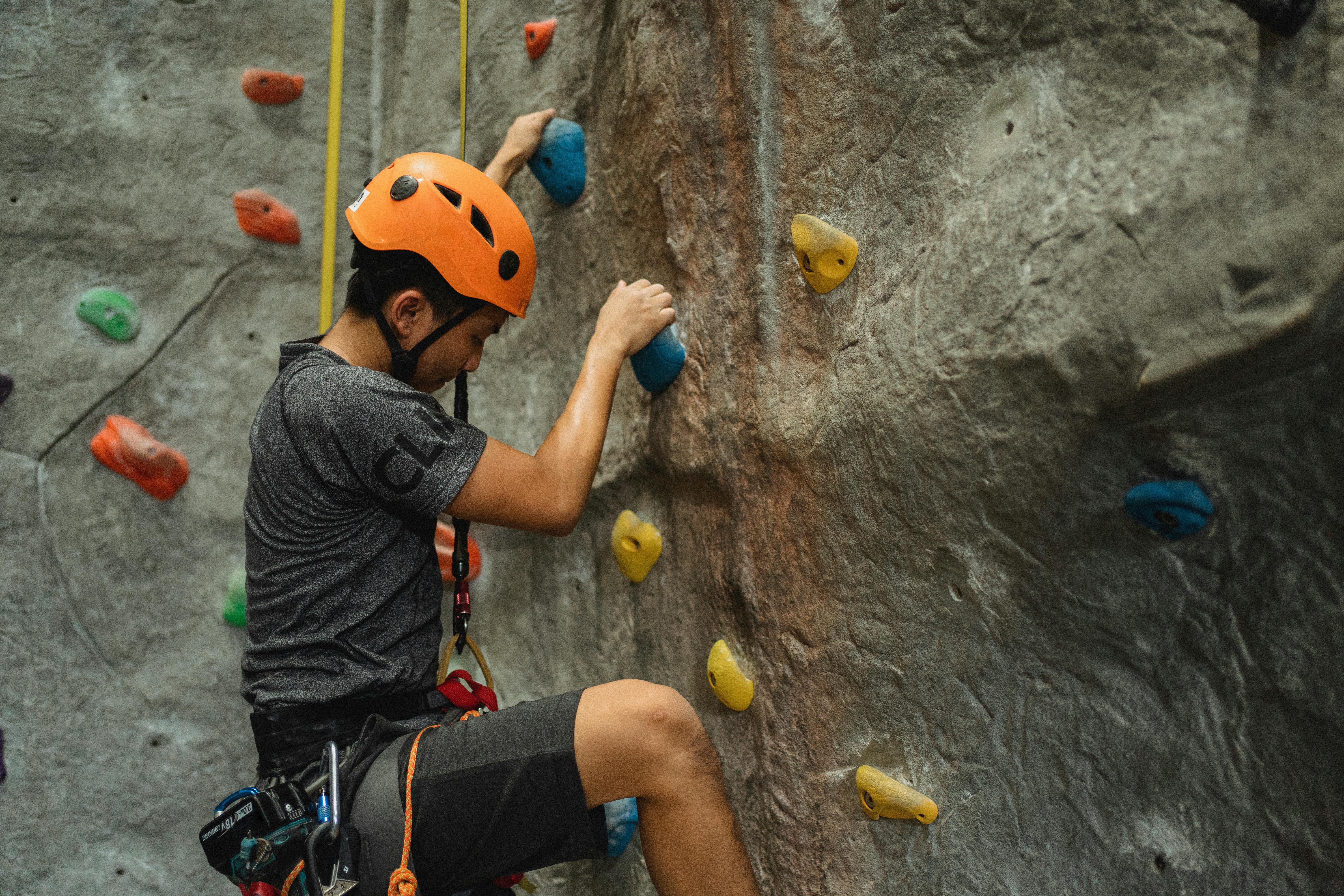
Indoor walls now produce most new climbers, and they build genuine ability. The skills they do not build are the ones that matter most on the first day outdoors.
What the wall teaches well
Gyms are excellent at movement. Setters design sequences that force specific body positions, and frequent repetition on varied angles builds strength and technique quickly.
They also build a rope-handling baseline. Belaying, tying in and lowering become automatic under supervision, in an environment where mistakes are usually caught by someone nearby.
Fitness developed indoors transfers directly. A climber who pulls hard on plastic generally pulls hard on rock, once the surface stops feeling alien.
The route is not marked
Indoors, coloured holds tell you where to go and where not to. Outside there are no marks, and finding the line is a genuine skill.
Rock offers thousands of features, most of them useless, some of them loose. Deciding which small edge is the intended hold takes practice that the gym never demands.
The same applies to feet. Indoor footholds are obvious and standardised; outdoor footwork often means trusting friction on a featureless smear you cannot see clearly.
Nothing is inspected for you
Gym anchors are engineered, installed to a standard and inspected on a schedule by staff with a legal duty. None of that applies to a cliff.
Outdoor fixed gear was placed by volunteers, sometimes decades ago, and is maintained by whoever chooses to. Trad protection is placed by the climber and is only as good as their judgement.
That judgement is not intuitive and cannot be self-taught safely from a book or a video. It is the specific thing that supervised outdoor instruction exists to build.
Consequence changes the calculation
Indoor falls land in clear space onto padded floors. Outdoors a fall can involve ledges, slabs, loose blocks, ropes running over edges and a ground that is uneven.
There is also weather, cold hands, rockfall, other parties above you and an approach walk that may already have tired you before the climbing starts.
None of this makes outdoor climbing unmanageable, but it does mean the risk cannot be judged by indoor experience. It is a different activity that shares a set of movements.
How the transition usually goes well
The reliable route out is a course with a qualified instructor, or repeated days with experienced partners who are explicitly teaching rather than just bringing someone along.
Starting well below indoor grade is normal and sensible. Most climbers find the first outdoor sessions humbling, which is information rather than failure.
Local knowledge matters too. Conditions, seepage, nesting restrictions and access agreements vary by crag, and the local climbing organisation is the source that keeps up with them.


