Backcountry Snow
Tree Wells And Snow Immersion
Deep unconsolidated snow around conifer trunks forms voids that a falling skier or rider can enter head first, producing a suffocation hazard that has nothing to do with avalanches.
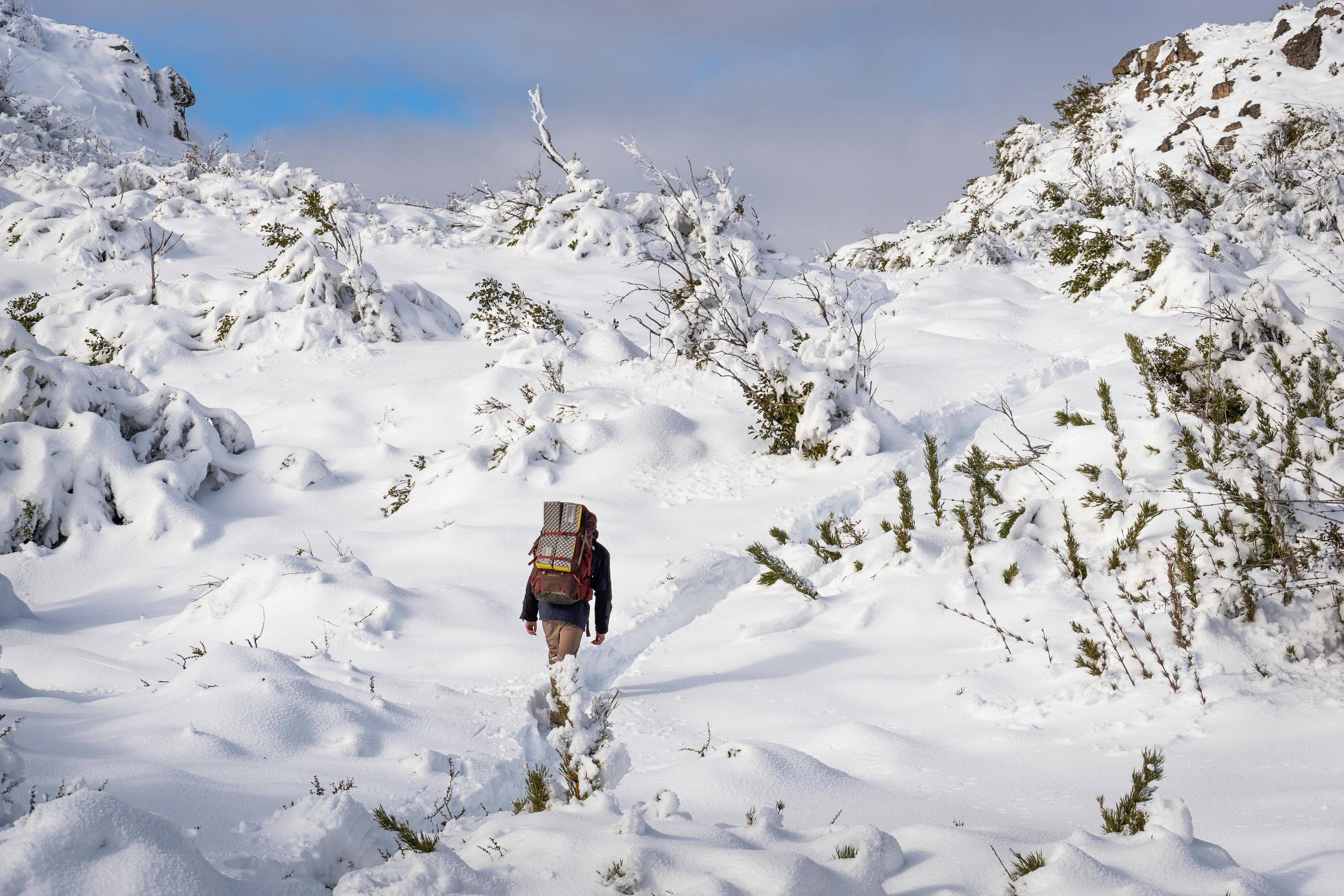
Deep snow near trees kills people in a way unrelated to avalanches, and it happens inside ski area boundaries as well as beyond them. The mechanism is simple and physical.
How the void forms
Conifer branches intercept falling snow, so much less reaches the ground immediately around the trunk than accumulates in the open a few metres away.
What does reach it remains loose and unconsolidated, sheltered from the wind and sun that would otherwise settle it. A cavity of soft snow and branches develops.
From above, the surface looks continuous. The void is invisible until somebody's weight breaks through the surrounding snow at its edge.
Why the position is the danger
A skier or rider approaching a tree typically falls toward it, which means entering the well head first with skis or a board above them.
In that inverted position, loose snow collapses in from above and packs around the face and chest. Every movement of the limbs brings more snow down.
Breathing becomes obstructed by snow at the airway and by pressure preventing the chest from expanding. This is snow immersion suffocation, and it can occur within minutes.
Self-rescue is often impossible
The combination of inversion, deep loose snow and equipment still attached leaves very little that a person can do for themselves once fully immersed.
Recorded incidents include strong, fit and experienced people who were unable to extract themselves from a position that looked survivable from outside.
Because there is no slide and no debris field, nothing marks the location. A person can be metres from a run and completely invisible from it.
Why partners matter more than equipment
The consistent finding is that survival depends on a companion arriving quickly, which requires that somebody knew where the person was.
Skiing trees within sight and voice of a partner, and stopping to confirm each other regularly, is the practice that makes rescue possible at all.
Avalanche transceivers are not designed for this and are of limited help, because the buried person is not under debris and the search problem is different.
When the hazard is highest
The risk is greatest during and immediately after heavy snowfall, before the new snow has settled, and in forest types with dense low branches.
It is present in bounds at ski areas, which is why patrols post warnings after storms and why deep-snow signage appears at the same time as powder.
Ski patrol and local area information are the current authority on conditions, and formal instruction in deep snow tree skiing is the sensible route into it.
Also by Jonas Lindqvist
- How to read an avalanche forecast properlyBackcountry Snow
- Spring snow: wet slides, timing, and the shrinking windowBackcountry Snow
- Your first season of ski touring: what nobody warns you aboutBackcountry Snow
- Electronics in the cold: keeping the things you depend on aliveGear & Kit


