Whitewater
How Craft Choice Changes The Line You Take
Kayaks, rafts, canoes and catarafts differ in draft, momentum and manoeuvrability, so the same rapid presents different routes and different hazards depending on what you are in.
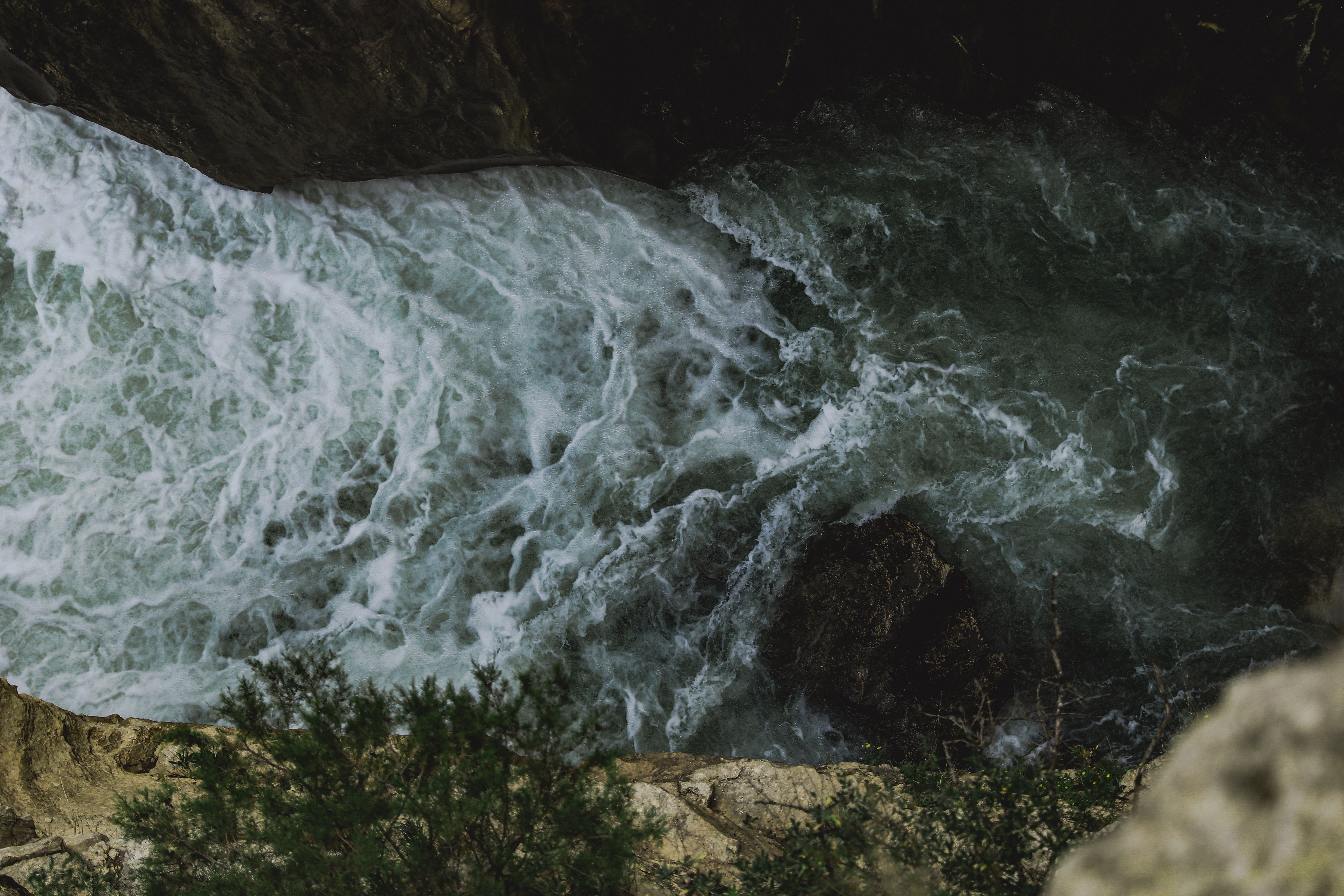
A rapid does not have one correct line. It has a line for each type of craft, because the qualities that make a route workable differ with what is floating on it.
Momentum versus manoeuvrability
A loaded raft carries substantial mass, which lets it push through hydraulics that would stop a kayak, but makes rapid direction changes slow.
A kayak is light and responsive, able to catch small eddies and change line late, but it can be stopped and held by features a raft would punch through.
These qualities point to different routes. A raft may aim to hit a feature straight and drive through it, where a kayak plans to avoid the same feature entirely.
Draft decides what is passable
How deep a craft sits determines which shallow channels are usable. A lightly loaded kayak passes over rock that grounds a loaded raft.
A cataraft, with two inflatable tubes and a frame between them, sits high and drafts shallowly while retaining the stability of a large craft.
Loading changes this within a trip. A raft carrying multi-day equipment behaves differently on day one than on day six, on the same water.
Open boats have a different limit
Open canoes ship water, and a swamped canoe becomes unmanageable long before it sinks. The limiting factor is often how much water comes aboard rather than difficulty.
This is why whitewater canoeists use flotation bags and spray covers, and why their route choice prioritises staying dry in a way kayakers do not need to.
Kneeling position, single-blade technique and the higher centre of mass also change what edging and bracing look like compared with a kayak.
Packrafts sit in their own category
Packrafts are light and portable, which makes them useful for reaching water that other craft cannot get to.
Their handling differs substantially from a hardshell kayak, with slower acceleration and different behaviour in hydraulics, and the skills do not transfer directly.
Their portability also encourages remote use, which means the trips they enable often carry higher consequences than the water grade alone suggests.
Mixed groups have to plan for both
A party containing rafts and kayaks needs to agree what each craft will do, since the safest line for one may put another somewhere unhelpful.
Rescue capability also differs. A raft provides a stable platform for recovering swimmers, while kayaks are more able to reach a person quickly in awkward positions.
Getting this right depends on experience with the specific craft, which is why instruction is craft-specific and competence in one does not certify competence in another.