Whitewater
Low Head Weirs And The Hazard That Looks Like Nothing
A uniform artificial drop creates a recirculating hydraulic that extends across the whole river with no exit, which is why weirs kill people on water that appears benign.
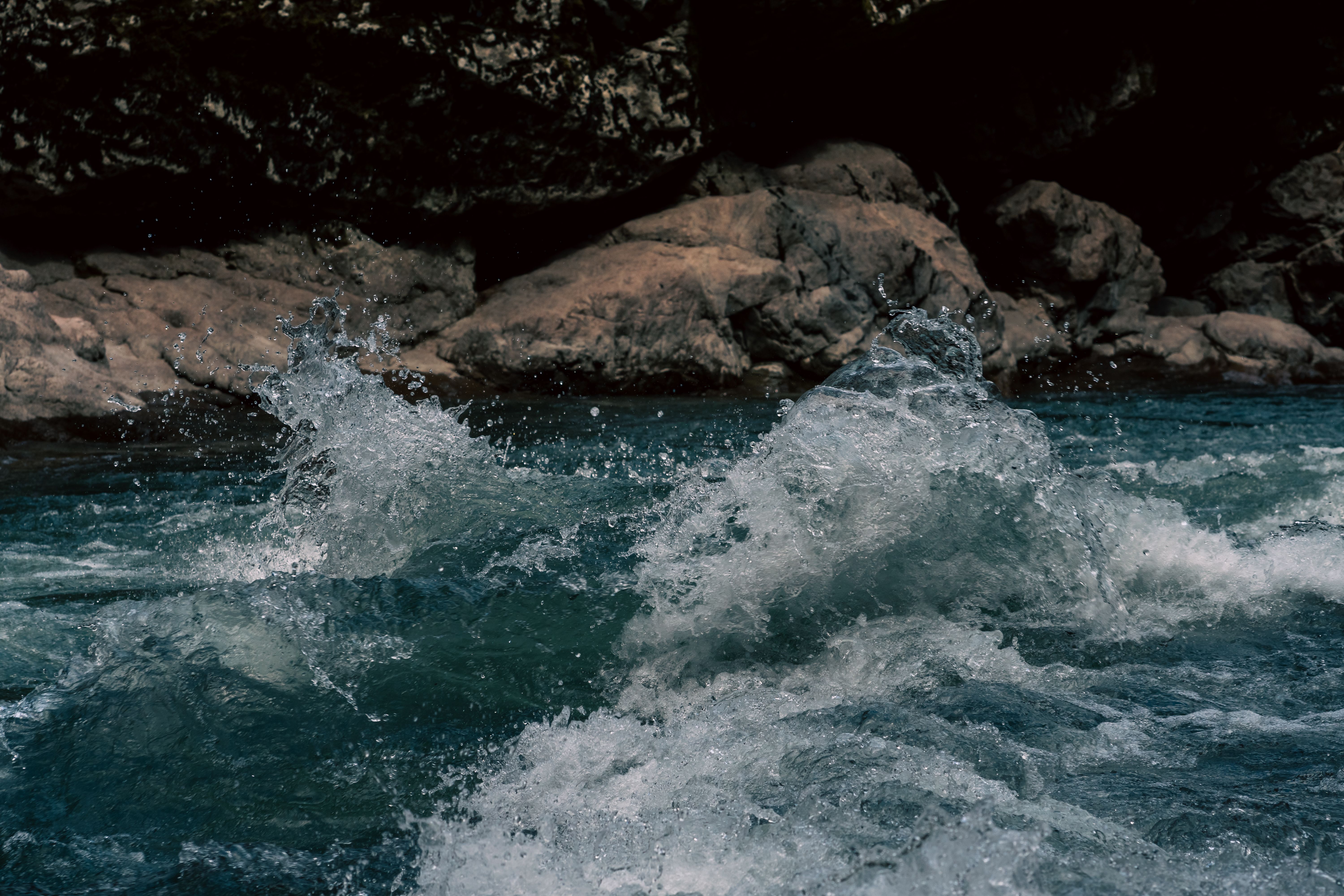
Weirs are responsible for drownings on rivers that look entirely gentle. The reason is geometric: an artificial drop produces a hydraulic that a natural rapid rarely does.
What the hydraulic does
Water falling over a drop plunges below the surface and creates a zone where surface water flows back upstream toward the base of the drop.
An object floating in that zone is carried back into the falling water, pushed down and under, and returned to the surface downstream to begin again.
This recirculation is what people mean by being caught in a hydraulic, and escaping it requires leaving the zone rather than swimming against the flow.
Uniformity is what makes weirs different
Natural rapids have irregular beds, so hydraulics form in patches with green water and eddies beside them. There is somewhere to go.
A weir is built straight and level across the channel, so the hydraulic it forms is continuous from bank to bank with no break in it.
A person recirculating in a natural feature can often work sideways to an edge. In a uniform weir there is no edge to reach.
The surface gives no warning
From upstream, a weir appears as a smooth horizon line with calm water above and often calm-looking water below. There is little visible turbulence.
This is the opposite of a natural rapid, which announces itself with noise and white water, and it is why weirs are described as drowning machines.
Low weirs are the most dangerous, because a large drop looks obviously serious while a small one looks like a step in the river.
Rescue attempts add casualties
Incidents at weirs frequently involve multiple deaths, because people entering the water to help are captured by the same recirculation.
Boats are drawn in as readily as swimmers, and a craft that enters the hydraulic is generally held and swamped rather than powering out.
This is why rescue services train specifically for weir incidents and why the standard guidance for bystanders is to call for help and to throw flotation rather than enter the water.
How paddlers treat them
The universal practice is portage. Weirs are walked around rather than assessed, because the feature does not offer the reading and route selection a natural rapid does.
Weirs also carry debris, reinforcing bar, fish passes and structures that are invisible from the surface, so the ground beneath the hydraulic is unknown.
Guidebooks, local paddling clubs and river authorities identify weirs on specific rivers, and swiftwater rescue training is where the mechanics of moving water are properly taught.